
















Should you take probiotics after antibiotics?
They can help with one specific problem: in Cochrane reviews, people who took probiotics alongside antibiotics had less antibiotic-related diarrhea. But one small study found that a probiotic slowed the return of a person's own gut bacteria afterward, so food (fiber and fermented foods) and time remain the foundation of recovery. Always finish your antibiotics as prescribed.
This article is for you if: you're on antibiotics or just finished a course, and want to know how your gut bounces back and whether a probiotic is worth it.
When your doctor prescribes antibiotics for a bacterial infection, they can be essential. The trade-off is that they can't tell harmful bacteria from the helpful ones in your gut. Here's what the research says about that damage, how long recovery takes, where probiotics help, where the evidence is mixed, and which Filipino foods give your gut a hand.
In this article
What do antibiotics do to your gut bacteria?
Your gut is home to trillions of microbes that help digest fiber and keep unfriendly species in check. If you're new to the topic, our beginner's guide to prebiotics and probiotics explains the basics.
Many antibiotics work across a broad range of species, so a course aimed at a chest or urinary infection also thins out the good bacteria in your colon. In one closely watched study, 12 healthy men took a 4-day course of three strong antibiotics. Early on, their guts lost Bifidobacterium species and bacteria that make butyrate, a fatty acid that feeds the cells lining the colon, while less friendly bacteria such as Enterococcus faecalis bloomed.[1]
That shake-up is why some people get loose stools, gas or bloating during a course. It's usually mild and passes. If diarrhea is severe, bloody, or comes with fever or strong cramps, see your doctor promptly, as it can signal an infection such as C. difficile that needs treatment.
One rule doesn't change: take your antibiotics exactly as prescribed, and don't stop early or skip doses to "protect" your gut. Caring for your gut is about what you do alongside and after the course, not instead of it.
How long does your gut take to recover?
For most healthy adults, the bulk of recovery happens within weeks, but a few species can stay missing for months. In the same study, gut bacteria returned to near-baseline within about 1.5 months. Yet 9 common species that all the men had before treatment were still undetectable in most of them after 180 days.[1] The authors described the gut as resilient, with a "mild yet long-lasting imprint."
- It was a small study of healthy men, using stronger antibiotics than most people take at home.
- Your own recovery will vary with the type of antibiotic, how long you took it, your diet, and how many courses you've had.
- Repeated courses matter. Each one is another disruption, so use antibiotics only when a doctor says you need them.
Do probiotics help during and after antibiotics?
For antibiotic-associated diarrhea, the evidence is fairly good. Several large reviews pooled the results of dozens of randomized trials:
- Children: a Cochrane review of 33 trials with 6,352 children found that 8% of those taking probiotics with antibiotics got diarrhea, compared with 19% of those who didn't. Higher doses (5 billion CFU or more a day) worked better than lower ones. The authors named Lactobacillus rhamnosus and Saccharomyces boulardii as examples of high-dose probiotics whose benefit still needs to be confirmed in a large trial.[2]
- Adults and children: a 2025 Cochrane update of 40 trials found antibiotic-associated diarrhea in 23% of people taking probiotics versus 27.4% of controls. For C. difficile diarrhea, the rate was 1.6% versus 3.2%, meaning about 65 people would need to take probiotics to avoid one case. The certainty of this evidence was rated low, and 28 of the included studies had ties to probiotic companies.[3]
- An earlier meta-analysis of 63 trials found the same pattern, but noted that strains were poorly documented.[4]
Two caveats. These trials measured diarrhea, not whether your microbiome rebuilds faster. And results are strain-specific. A benefit seen with L. rhamnosus or S. boulardii doesn't automatically carry over to other strains. Our guide on how to choose a probiotic in the Philippines covers how to read a label for strain names and CFU counts.
Timing: a common practical tip is to take a bacterial probiotic a few hours away from your antibiotic dose, so the drug is less likely to hit it directly. S. boulardii is a yeast, so antibacterial drugs don't target it the same way. Ask your pharmacist about timing for your specific antibiotic. If you're immunocompromised or very ill, check with your doctor first, since the reviews note rare serious infections in these groups.[2]
Can probiotics slow recovery?
Possibly, and it's worth knowing. A 2018 study in Cell compared three paths after antibiotics in mice and a small group of people: natural recovery, a multi-strain probiotic, or a transplant of the person's own stored stool bacteria. Compared with recovering on their own, the probiotic group's native gut bacteria came back markedly later and less completely. The stool transplant restored things within days.[5]
The study was small, used one probiotic mix, and measured the microbiome rather than how people felt, so it doesn't cancel out the diarrhea trials. But it's a reason not to assume that more probiotics means faster recovery. Probiotics look most useful for the specific job of easing antibiotic-related diarrhea. For rebuilding your own gut community, food does the heavy lifting.
Which foods help your gut recover?
Feed the bacteria you want back, and add fermented foods. In a 17-week randomized study at Stanford, 36 healthy adults ate either a high-fiber or a high-fermented-food diet. The fermented-food group steadily gained gut diversity and had lower inflammatory markers. The high-fiber group's diversity stayed stable, though their bacteria's fiber-digesting enzymes increased.[6] These people weren't coming off antibiotics, but both habits are low-risk.
Practical ideas from the Filipino kitchen:
- Fiber: kamote, saba, monggo, oats, malunggay, kangkong, okra, and fruit such as papaya and banana. Build up slowly if you're bloated, and drink plenty of water in the heat.
- Fermented foods: plain yogurt with live cultures, kefir, kimchi, and traditional buro such as burong mustasa. Vinegar pickles like atchara usually don't contain live cultures. Our piece on kombucha powder vs brewed kombucha explains why "live" matters.
- Everyday habits: sleep, movement and fewer ultra-processed snacks help too. Your gut also plays a big part in your immunity.
How do your options compare?
| Option | What the research shows | Strength of evidence | Practical tip |
|---|---|---|---|
| Finish the course as prescribed | Treats the infection you were prescribed for | Your doctor's call | Never skip doses or stop early |
| Probiotics during antibiotics | Less antibiotic-associated diarrhea in children and adults | Moderate (children), low (adults and children) | Strain matters; space bacterial probiotics a few hours from your dose |
| Probiotics after antibiotics | One small study found slower return of native gut bacteria | Limited | Not a substitute for food and time |
| Fermented foods | Raised gut diversity and lowered inflammatory markers in healthy adults | One randomized study, 36 people | Add a serving or two a day of live-culture foods |
| Fiber-rich plants | Boosted bacteria's fiber-digesting enzymes; diversity stable | One randomized study, 36 people | Increase slowly with plenty of water |
| Time | Most bacteria back within about 6 weeks; a few species missing at 6 months | One small study, 12 men | Be patient and avoid unneeded antibiotics |
Sources: the reviews and studies listed in the References.[1] [2] [3] [5] [6]
Where do our probiotic melts fit?
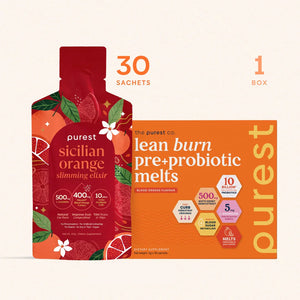
Our Daily Pre+Probiotic Melts give you 15 billion CFU from 7 probiotic strains plus 2 prebiotics, which are fibers that feed good bacteria, in a cranberry-flavored sachet that melts on your tongue. They're designed to support everyday gut balance, at ₱2,200 for 30 sachets (about ₱73 a day).
To be clear: the trials above tested specific strains, and our melts were not among the products studied. Because results are strain-specific, we can't promise the same effects. Our melts aren't a treatment for antibiotic-related diarrhea and don't replace your doctor's advice or a fiber-rich diet. If you'd like to use them around a course of antibiotics, ask your pharmacist about timing first.
Shop Daily Pre+Probiotic Melts
90-day money-back guarantee
Related reading: The beginner's guide to prebiotics and probiotics · How to choose a probiotic supplement in the Philippines · Why you keep getting sick: the gut and immunity connection
Frequently asked questions
Can I take probiotics at the same time as antibiotics?
Many people take them during the course, which is how most diarrhea trials were done. A common tip is to space a bacterial probiotic a few hours away from each antibiotic dose. Ask your pharmacist about timing for your specific medicine.
How long should I take probiotics after antibiotics?
There's no agreed answer. The diarrhea trials mostly gave probiotics during the course and for a short time after. One small study suggests that probiotics may slow the return of your own gut bacteria, so focus on fiber and fermented foods for the weeks after.
How long does it take for gut bacteria to come back after antibiotics?
In one study of healthy men, most gut bacteria returned to near-normal within about 6 weeks, but a few common species were still missing at 6 months. Recovery varies from person to person.
Is diarrhea after antibiotics normal?
Mild, short-lived loose stools are common. See a doctor quickly if diarrhea is severe, watery many times a day, bloody, or comes with fever or strong cramps, as it may need treatment.
Should I stop my antibiotics early if my stomach is upset?
No. Take antibiotics exactly as prescribed. If side effects are hard to manage, talk to your doctor before changing anything.
Key takeaways
- Antibiotics are often essential. Always take them exactly as prescribed.
- In one study, most gut bacteria recovered within about 6 weeks, but some species were still missing at 6 months.
- Cochrane reviews found less antibiotic-associated diarrhea with probiotics, and results depend on the strain.
- One small study found a probiotic slowed the return of native gut bacteria.
- Fiber-rich staples and live fermented foods are the low-risk foundation.
References
[1] Palleja A, Mikkelsen KH, Forslund SK, et al. Recovery of gut microbiota of healthy adults following antibiotic exposure. Nat Microbiol. 2018.
[2] Guo Q, Goldenberg JZ, Humphrey C, El Dib R, Johnston BC. Probiotics for the prevention of pediatric antibiotic-associated diarrhea. Cochrane Database Syst Rev. 2019.
[3] Esmaeilinezhad Z, Ghosh NR, Walsh CM, et al. Probiotics for the prevention of Clostridioides difficile-associated diarrhea in adults and children. Cochrane Database Syst Rev. 2025.
[4] Hempel S, Newberry SJ, Maher AR, et al. Probiotics for the prevention and treatment of antibiotic-associated diarrhea: a systematic review and meta-analysis. JAMA. 2012.
[5] Suez J, Zmora N, Zilberman-Schapira G, et al. Post-antibiotic gut mucosal microbiome reconstitution is impaired by probiotics and improved by autologous FMT. Cell. 2018.
[6] Wastyk HC, Fragiadakis GK, Perelman D, et al. Gut-microbiota-targeted diets modulate human immune status. Cell. 2021.
These statements have not been evaluated by any regulatory authority. This product is not intended to diagnose, treat, cure, or prevent any disease. Individual results may vary. Consult a healthcare provider before use if you are pregnant, breastfeeding, or on prescribed medication.


