

















Collagen peptides are collagen that has been broken into small fragments, also sold as hydrolysed collagen. "Di-peptides" are fragments just two amino acids long. Studies show some of these, like Pro-Hyp, reach the blood after you drink collagen. Absorption is well established, but collagen peptides benefits for skin are still debated, so read labels for dose and evidence, not buzzwords.
Key takeaways
- "Hydrolysed collagen", "collagen hydrolysate" and "collagen peptides" describe the same thing: collagen cut into small pieces.
- Di-peptides (two amino acids) and tri-peptides (three) can cross the gut wall intact, and Pro-Hyp is the main one found in blood.
- What's in the powder isn't what ends up in your blood. Digestion creates many of the di-peptides on its own.
- One supplier-run trial found a di-peptide-enriched collagen beat a standard one for skin, but independent reviews of collagen for skin are mixed.
- Judge a label by dose, source, what else is in it and price per gram, not by "nano" or "clinically proven" alone.
What are collagen peptides?
Collagen is a large, rope-like protein. Makers break it down with heat, which gives gelatin, and then enzymes, which cut it into short chains called peptides. The result goes by several names: collagen peptides, hydrolysed (or hydrolyzed) collagen, and collagen hydrolysate.
How far it's broken down is measured as average molecular weight, in daltons (Da). In a 2024 crossover study in Frontiers in Nutrition, the hydrolysates tested averaged 2,000 or 5,000 Da, while the gelatin used in an earlier comparison sat around 100,000 Da.
What does "di-peptides" mean on a collagen label?
A peptide is a short chain of amino acids. A di-peptide has two, and a tri-peptide has three. Collagen is unusually rich in three amino acids: glycine (Gly), proline (Pro) and hydroxyproline (Hyp). Gly-Pro-Hyp is the most common triplet in its structure, at about 10.5% of the sequence.
Hydroxyproline is almost unique to collagen, so researchers use it as a tracer. The two di-peptides that matter most in the research are:
- Pro-Hyp (prolyl-hydroxyproline), the most abundant collagen fragment found in blood after people drink collagen.
- Hyp-Gly (hydroxyprolyl-glycine), the other main fragment found in blood.
A label saying "di-peptides" usually means the maker has processed the collagen to contain more of these short fragments from the start.
Do collagen peptides actually get absorbed?
Yes, and this is the best-supported part of the story. Since 2005, studies have repeatedly found intact collagen di- and tri-peptides in human blood after people drink hydrolysate. Your gut has a dedicated transporter, called PepT1, that moves di- and tri-peptides across the intestinal wall.
The 2024 Frontiers in Nutrition study gave six healthy adults 10g of fish, pork or beef collagen hydrolysate on separate days. Between 36% and 47% of the collagen marker in their blood was still in peptide form rather than single amino acids. Two findings matter for anyone reading labels:
- Pro-Hyp was the top peptide in blood, even though it had the lowest average content in the powders. Digestion made it from longer fragments.
- Gly-Pro was the most plentiful peptide in the powders, yet its blood levels were about 100 times lower than Pro-Hyp.
The starting mix doesn't predict what reaches your blood. The same study found the 2,000 Da and 5,000 Da products gave similar peptide levels. An earlier study it cites found hydrolysate raised blood hydroxyproline far more than gelatin did (169 vs 94 nmol/mL).

How collagen becomes absorbable peptides. Source: Virgilio et al., Frontiers in Nutrition, 2024.
Peptides don't linger. In a 2018 study where people took 4.5g of hydrolysate daily for four weeks, peptide levels peaked about an hour after each dose and were back to baseline within 24 hours. That's one reason daily use, not occasional use, is how collagen is studied.
The limit: the 2024 study had only six people and was funded by a collagen supplier. And showing that peptides reach the blood doesn't show they change your skin.
Collagen peptides benefits for skin: what does the research show?
The overall picture is mixed. A 2025 meta-analysis in the American Journal of Medicine of 23 trials found benefits overall, but none in trials without industry funding or in the highest-quality trials. A 2026 re-analysis in the Journal of Cosmetic Dermatology of two earlier positive reviews found no benefit after correcting data errors. We unpack both in our collagen benefits pillar guide.
Is there evidence that di-peptides make a difference?
The main trial comes from Nitta Gelatin, the Japanese collagen maker behind Replenwell®. In a 2016 trial in the Journal of the Science of Food and Agriculture, researchers gave 85 healthy Chinese women either a high-di-peptide fish collagen, a standard one, or a placebo for eight weeks, at 5g a day. The high-di-peptide version improved skin moisture, elasticity, wrinkles and roughness more than the other two. The standard version also beat placebo on some measures.
It's one trial, run by the company that sells the ingredient, in women who described their skin as dry. We haven't found an independent trial that repeats the comparison. And it doesn't tell you how any specific product on a shelf will perform.
Does marine or bovine make a difference to absorption?
Less than marketing suggests. In the 2024 study, fish, pork and beef hydrolysates delivered comparable amounts of free hydroxyproline to the blood. Some individual peptides differed: fish collagen gave higher Hyp-Gly levels than beef. The authors concluded absorption was broadly comparable across sources. Source matters more for allergies, diet and religious practice, which we cover in marine, bovine or plant collagen.
How to read a collagen peptide label
Whether you're shopping at Watsons, Mercury Drug or a Shopee or Lazada store, the same checks apply. Look at the pack photo, not just the listing copy, since the two don't always match.
| Label term | What it means | What to check |
|---|---|---|
| Hydrolysed / peptides | Collagen cut into fragments | Dose per serving in mg |
| Di-peptides | More two-amino-acid fragments | Is a study cited? |
| Molecular weight (Da) | Average fragment size | Useful, not decisive |
| Marine / fish | Made from fish skin or scales | Fish allergy warning |
| "Nano", "ultra-absorbable" | No standard definition | Ask for the evidence |
Two more checks. First, see what else is in the formula. Vitamin C, sugar or other actives change what you're paying for and make it harder to credit collagen alone. Second, work out price per gram of collagen: divide the price per serving by the grams of collagen in it. Our buyer's guide to collagen in the Philippines covers registration, dose and price in more detail.
Tried collagen before and saw nothing?
That's common, and it doesn't mean you did something wrong. The trials above ran eight weeks or longer with daily use, so a box taken on and off isn't a fair test. And the independent reviews suggest some people may see little change. Our guide on how long collagen takes to work sets realistic timelines.
Where The Purest Co's collagen fits
We make two marine collagen options that map onto this article.
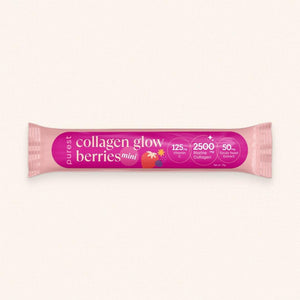
- Collagen Glow Berries uses 6,000mg Replenwell® Marine Collagen Di-Peptides per sachet, with 250mg Vitamin C, 100mg Bilberry Extract and 50mg Glutathione. At ₱5,100 for 30 sachets, that's ₱170 a sachet, or about ₱28 per gram of collagen.
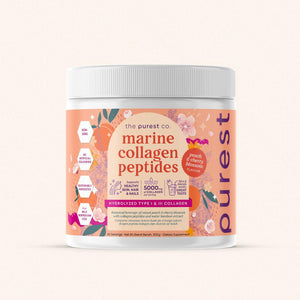
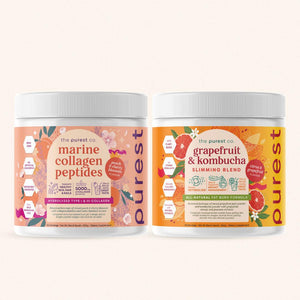
- Marine Collagen Peptides - Peach gives 5,000mg Marine Collagen per scoop, with 50mg Water Bamboo Extract and 10mg Beta-Carotene. At ₱2,200 for 30 servings, that's about ₱73 a serving, or about ₱15 per gram.
The di-peptide option costs more per gram and adds vitamin C and other ingredients. The plain powder is the simpler, lower-cost way to take collagen daily. As covered above, independent research hasn't settled whether di-peptide enrichment changes skin results, so choose on budget, taste and routine. Both are made from fish, so skip them if you have a fish allergy.
Frequently asked questions
Are collagen peptides and hydrolysed collagen the same thing?
Yes. Collagen peptides, hydrolysed collagen, hydrolyzed collagen and collagen hydrolysate all describe collagen that has been broken into short chains using enzymes. Products differ in source, average fragment size and dose, but the name alone doesn't tell you one is better. Check the dose per serving and what else is in the formula.
Are di-peptides better than regular collagen peptides?
Possibly, but the evidence is thin. One eight-week trial run by an ingredient supplier found a di-peptide-enriched fish collagen improved skin measures more than a standard one. We haven't found independent trials repeating that result. Digestion also creates di-peptides from regular collagen, so the starting mix doesn't predict what reaches your blood.
How much collagen peptides should I take a day?
There's no proven ideal dose. Skin trials have used anywhere from 0.3g to 10g a day, and a 2026 re-analysis found no sign that bigger doses worked better. Most trials used daily doses for eight weeks or longer. Follow the label, take it every day rather than occasionally, and judge results over two to three months, not two weeks.
Is marine collagen absorbed better than bovine?
Not clearly. A 2024 study comparing fish, pork and beef collagen hydrolysates found broadly comparable absorption, with small differences in individual peptides such as Hyp-Gly. The study was small, with six people. Choose a source based on allergies, diet or religious practice rather than absorption claims.
Can I take collagen peptides if I'm allergic to fish?
Avoid marine collagen if you have a fish allergy, since it's made from fish skin or scales. Check the allergen line on the pack, not just the product name. If you have any food allergy and want to try a different collagen source, ask your doctor first.
Sources: Virgilio et al., Frontiers in Nutrition, 2024 · Shigemura et al., Journal of the Science of Food and Agriculture, 2018 · Inoue, Sugihara and Wang, Journal of the Science of Food and Agriculture, 2016 · Myung and Park, American Journal of Medicine, 2025 · Grimes and Mahto, Journal of Cosmetic Dermatology, 2026


