

















The best collagen supplement in the Philippines is one that is FDA PH registered, lists how many grams of hydrolysed collagen you get per serving, suits your diet and allergies, and costs a price per gram you can afford every day for two to three months. Brand, packaging and influencer reviews matter far less than those four checks.
Key takeaways
- Start with FDA PH registration. You can check any product for free on the FDA Verification Portal.
- Look for grams of hydrolysed collagen per serving on the label, not a vague "collagen blend".
- Drinks, powders and tablets can all deliver collagen. Compare dose, sugar and price per gram, not format.
- Marine collagen comes from fish. If you have a fish allergy, ask your doctor first.
- The skin research is mixed, so be wary of any brand promising dramatic or guaranteed results.
What makes the best collagen supplement in the Philippines?
Collagen is the main protein in your skin's middle layer, and your body makes less of it as you age. Supplements supply collagen that has been broken down into small pieces called peptides. (Our guide to collagen benefits for skin covers what the research shows.)
Before you compare products, it helps to know where the science stands. A 2023 review of 26 trials in Nutrients found collagen improved skin hydration and elasticity compared with placebo, though the authors flagged biases in the trials. A 2025 review in The American Journal of Medicine found those benefits disappeared when it counted only high-quality trials or trials not funded by companies.
So no collagen product can honestly promise you results. What you can control is buying one that is legal, clearly labelled, safe for you and affordable enough to take consistently. The seven checks below cover exactly that.
1. Is it registered with FDA Philippines?
This is the floor. In the Philippines, a food supplement needs a Certificate of Product Registration (CPR) from the Food and Drug Administration before it can be sold. FDA PH regularly warns the public not to buy unregistered supplements, including collagen and vitamin C products found through online monitoring. It says it cannot assure the quality and safety of products that haven't gone through its evaluation.
To check a product, FDA PH advises searching its name or the registration number on the label at the FDA Verification Portal (verification.fda.gov.ph). You can report unregistered products through the agency's eReport page on the same advisory.
One wording trap: supplements in the Philippines are FDA registered, not "FDA approved". A label or ad that says "approved" is a red flag.
2. How many grams of collagen are in one serving?
Look for a clear number, such as 5,000mg (5 g) of collagen per sachet or scoop. If a label hides collagen inside a "proprietary blend" or only lists the total weight of the sachet, you can't tell how much you're actually getting.
There's no official daily target for collagen, and trials have used different amounts. In one widely cited German trial of 69 women aged 35 to 55, both 2.5 g and 5 g a day improved skin elasticity after eight weeks compared with placebo. That study used one specific porcine collagen, so it doesn't prove every product at that dose will work, but it shows that more grams isn't automatically better.
A practical rule: pick a dose that matches the kind of amounts used in research, then compare prices on that basis.
3. Is the collagen hydrolysed?
Hydrolysed collagen (also called collagen hydrolysate or collagen peptides) has been broken down with enzymes into short chains. That's the form used in almost all skin trials.
It matters because your gut can absorb small collagen fragments. In a 2005 study in the Journal of Agricultural and Food Chemistry, collagen peptides such as prolyl-hydroxyproline (Pro-Hyp) appeared in volunteers' blood after they took gelatin hydrolysates, peaking one to two hours later. Labels may say "peptides", "di-peptides" or "tri-peptides" to describe how small the pieces are. Our guide to collagen peptides explains those terms.
4. Where does the collagen come from?
Most supplements use marine collagen (from fish skin or scales) or bovine collagen (from cows). Studies haven't shown one source works better for skin. There's also no such thing as true plant collagen; vegan "collagen boosters" contain nutrients, not collagen. Our article on marine, bovine and plant collagen goes deeper.
Source matters most for allergies and diet:
- Fish allergy: Fish collagen can trigger reactions. A study of over 100 people with fish allergy found collagen was an important allergen for about 20% of them. If you're allergic to fish, avoid marine collagen unless your doctor says otherwise.
- Religious or dietary rules: If you eat halal, check for a halal certification on the pack. If you avoid beef or pork, check the source before buying.
Collagen drink vs powder vs tablets: which form is best?
No form has been shown to work better for skin, because they all contain the same hydrolysed peptides once dissolved. Choose the one you'll actually take every day, then compare what else comes with it.
| Form | Good for | Check before buying |
|---|---|---|
| Drink sachet | Pre-measured, quick, tasty | Sugar and price per gram |
| Powder (tub) | Lower cost, flexible serving | Scoop size, mixing daily |
| Tablets or capsules | Portable, no taste | How many make one dose |
| Gummies | Taste, easy habit | Grams per serving, sugar |
Tablets and gummies are convenient, but a single piece can only hold so much, so check how many you'd need to reach a dose in grams. Drinks and powders make larger doses easier.
5. What else is in it?
Many collagen products add other ingredients. Some are useful, some are just there to sell the label.
- Vitamin C: Your body needs it to make collagen, which is why the two are often paired. You can also get plenty from fruit and vegetables, so it's a nice extra rather than essential.
- Sugar: A sweetened drink taken daily adds up, especially if you already have milk tea or soft drinks. Check sugar per serving or choose a zero-sugar version.
- Long ingredient lists: Ten extra extracts at tiny doses add cost, not clear benefit. Check that each added ingredient is listed with an amount.
6. What's the real price per gram?
Sticker price is misleading because sachet and tub sizes vary. Work out what you pay for each gram of collagen instead:
- Divide the price by the number of servings to get the price per serving.
- Divide the price per serving by the grams of collagen per serving.
For example, a ₱1,500 tub with 30 servings costs ₱50 per serving. If each serving has 5 g of collagen, that's ₱10 per gram. Then decide whether extras like vitamin C, flavour or a zero-sugar formula are worth any difference to you.
Think in months, not weeks. The German trial above measured results after eight weeks, so budget for at least two months, ideally three. Our guide on how long collagen takes to work explains the timeline.
7. Are the claims honest?
Given how mixed the research is, the way a brand talks is a useful quality signal. Be cautious if you see:
- "FDA approved" (Philippine supplements are registered, not approved).
- Promises to cure, treat or prevent a disease. FDA PH requires supplement labels to state they are not medicine.
- Results "overnight" or "in 3 days". Trials measured changes over weeks to months.
- Before-and-after photos as the main proof, or reviews that all sound the same.
Good signs are a full ingredient list with amounts, a named collagen source, contact details for the company, and a money-back or return policy you can read before buying.
Where should you buy collagen in the Philippines?
Fakes and unregistered imports are a real problem on marketplaces. Buy from the brand's own website, its official store on Shopee or Lazada (look for the "Mall" or "LazMall" badge), or a pharmacy such as Watsons or Mercury Drug. Avoid sellers offering a well-known product at a price far below everyone else. When it arrives, check that the seal is intact, the expiry date is clear, and the product name matches what you looked up on the FDA portal.
How do The Purest Co's collagen supplements compare on these checks?
We make two collagen formats, both FDA PH registered and made from fish collagen, so neither is suitable if you have a fish allergy.
Collagen Glow Berries is a single-serve drink sachet with 6,000mg Replenwell® Marine Collagen Di-Peptides, 250mg Vitamin C, 100mg Bilberry Extract and 50mg Glutathione. A box of 30 sachets is ₱5,100, or ₱170 per sachet, which works out to about ₱28 per gram of collagen. It suits people who want everything in one pre-measured drink.
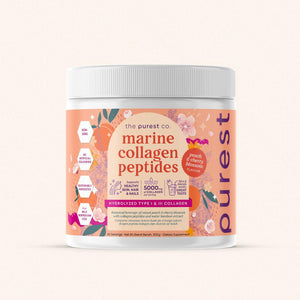
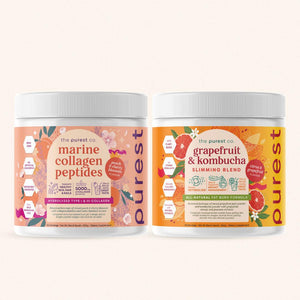
Marine Collagen Peptides - Peach is a powder with 5,000mg Marine Collagen, 50mg Water Bamboo Extract and 10mg Beta-Carotene per scoop. One 30-serving tub is ₱2,200 (about ₱73 per scoop, or ₱15 per gram of collagen), and a pack of three is ₱5,600 (about ₱12 per gram). It's halal-certified and suits people who want the lower price per gram and don't mind scooping. Both are formulated in Singapore.
Frequently asked questions
What is the best collagen supplement in the Philippines?
There's no single best product for everyone. The best choice is one that is FDA PH registered, states the grams of hydrolysed collagen per serving, suits your allergies and diet, and has a price per gram you can keep up for two to three months. Check registration on the FDA Verification Portal before buying.
Is a collagen drink better than collagen tablets?
Not in terms of how collagen works. Both contain hydrolysed collagen peptides, and no study shows one form works better for skin. The real differences are dose and convenience: a drink or powder can deliver several grams in one serving, while tablets may need several pieces to reach the same amount.
Is marine collagen better than bovine collagen?
Neither has been proven better for skin. Both are sold as hydrolysed peptides, and the bigger differences are practical. Choose based on your diet and allergies: avoid marine collagen if you're allergic to fish, check the source if you avoid beef or pork, and look for halal certification if you need it.
How do I check if a collagen supplement is FDA registered?
Go to the FDA Verification Portal at verification.fda.gov.ph and search the product name or the registration number printed on the label. If it doesn't appear, don't buy it. FDA PH says it cannot assure the quality and safety of unregistered supplements. Remember that supplements are registered, not "FDA approved".
Can I take collagen if I have a fish or shellfish allergy?
Avoid marine collagen if you're allergic to fish. In one study of over 100 people with fish allergy, collagen was an important allergen for about 20% of them, including some who tested negative to other fish allergens. If you have a shellfish or any seafood allergy, talk to your doctor or allergist before taking a marine supplement.
Sources: Nutrients, 2023 (26-trial meta-analysis) · The American Journal of Medicine, 2025 (23-trial meta-analysis) · Proksch et al., Skin Pharmacology and Physiology, 2014 · Iwai et al., Journal of Agricultural and Food Chemistry, 2005 · Kalic et al., Journal of Allergy and Clinical Immunology: In Practice, 2020 (AAAAI summary) · FDA Philippines advisory on unregistered food supplements · FDA Philippines advisory and Verification Portal guidance


