















How much protein do women need per day?
The bare minimum for healthy adults is about 0.8 g per kg of body weight, and the Philippine recommendation for adult women is 62 g a day. Many women do better on 1.0 to 1.2 g per kg, and active women on 1.2 g per kg or more. For a 55 kg woman, that's roughly 55 to 90 g a day, spread across meals.
This article is for you if: you want a clear daily protein number, you're in your 30s or 40s and want to keep your muscle, or your plate is mostly rice and you're not sure you're getting enough.
Protein advice is confusing because the numbers answer different questions: the minimum to avoid deficiency, what helps you keep muscle as you age, and what supports training. Here's how to find your number, what it looks like in Filipino food, and where collagen fits.
In this article
How much protein do women need a day?
Protein needs are written as grams per kilogram (g/kg) of body weight per day, so start with your weight.
- The Philippine recommendation. The 2015 Philippine Dietary Reference Intakes (PDRI) from DOST-FNRI set the recommended intake for adult women at 62 g of protein a day, for a reference woman weighing 52.5 kg.[1] That works out to about 1.2 g per kg.
- The international baseline. Many countries use 0.8 g per kg a day as the recommended amount for adults.[2] For a 55 kg woman, that's 44 g.
So the Philippine figure is already more generous than the 0.8 g baseline. Using a newer measurement method, one research group estimated adult needs at closer to 1.2 g per kg a day, about 40% higher, in both younger and older adults.[2] That hasn't changed official recommendations yet, but it's a reminder that 0.8 g is a floor, not a target.
Why does protein matter more after 30?
Muscle changes slowly as you age, and you can't feel it happening. In an MRI study of 468 men and women aged 18 to 88, muscle as a share of body weight started to fall from the third decade of life. A clear drop in total muscle mass showed up from the end of the fifth decade, mostly in the legs.[3] Women also started with less muscle than men: 21 kg compared with 33 kg on average.[3]
Muscle helps you climb stairs, carry groceries, keep your balance and stay independent later in life. Enough protein plus strength training is the main way to protect it. If your knees or hips are part of the picture, our guide to joint health for active women covers training safely.
Protein also helps with fullness. A review of short feeding studies found a modest effect: people felt fuller after higher-protein meals.[4] The same review found this didn't reliably make people eat less at their next meal, so it's a helpful nudge, not a magic fix.[4] The authors concluded that diets with 1.2 to 1.6 g per kg a day, and possibly 25 to 30 g of protein per meal, may help with appetite and weight management.[4] That can help in your 40s, when perimenopause weight gain often shows up.
How much protein should you aim for by goal?
Here's what expert groups recommend, with the daily grams for a 55 kg woman.
| Who | Recommended g/kg a day | For a 55 kg woman | Source |
|---|---|---|---|
| Baseline (minimum) | 0.8 | 44 g | RDA used in many countries |
| Adult Filipino women | 62 g a day (about 1.2) | 62 g | PDRI 2015, DOST-FNRI |
| Weight management and appetite | 1.2 to 1.6 | 66 to 88 g | Leidy et al., 2015 review |
| Healthy adults over 65 | 1.0 to 1.2 | 55 to 66 g | PROT-AGE 2013; ESPEN 2014 |
| Active adults over 65 | 1.2 or more | 66 g or more | PROT-AGE 2013 |
| Regular exercise or strength training | 1.4 to 2.0 | 77 to 110 g | ISSN position stand, 2017 |
Sources: PDRI 2015, the reviews and position papers listed in the References.[1] [2] [4] [5] [6] [7]
- Older adults. The PROT-AGE group recommends at least 1.0 to 1.2 g per kg a day for people over 65, and 1.2 to 1.5 g for most older adults with illness.[5] The ESPEN expert group reached the same numbers.[6] They were written for people over 65.
- Exercise. The International Society of Sports Nutrition says 1.4 to 2.0 g per kg a day is enough for most people who exercise to build and keep muscle.[7] If you exercise lightly, the lower end is plenty.
How much protein is in Filipino foods?
Everyday Filipino foods add up fast. We used the closest matches in USDA FoodData Central to estimate protein per serving.
| Food | Serving | Protein (approx.) |
|---|---|---|
| Egg | 1 large egg (50 g) | 6 g |
| Tokwa (firm tofu) | 100 g, about one block | 17 g |
| Bangus (milkfish), cooked | 100 g, about a palm-sized piece | 26 g |
| Galunggong, cooked | 100 g of fish (closest match: jack mackerel) | 26 g |
| Chicken breast, roasted | 100 g, about a palm-sized piece | 31 g |
| Monggo (mung beans), boiled | 1 cup cooked (about 200 g) | 14 g |
Sources: USDA FoodData Central, SR Legacy, per-100 g values scaled to the serving.[8] Brands and cooking methods vary, so treat these as estimates.
A day built from these foods could look like this: 2 eggs at breakfast (12 g), a piece of bangus at lunch (26 g), ginisang monggo with tokwa for merienda or dinner (about 25 g), and a serving of chicken (31 g). That's over 90 g without any supplements.
Does collagen count as protein?
Yes, collagen is a protein and its grams count toward your daily total. But it isn't a complete protein. Collagen lacks one essential amino acid, tryptophan, so it's classed as an incomplete protein source.[9]
One analysis calculated that collagen peptides could make up as much as 36% of the protein in a typical Western diet while still meeting essential amino acid needs.[9] The amounts used in collagen research, 2.5 to 15 g a day, sit well below that ceiling.[9] So collagen can sit alongside eggs, fish, chicken and tokwa, but shouldn't replace them. For how much to take, see our guide to how much collagen to take a day.
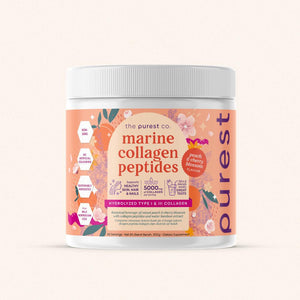
If you'd like a simple daily collagen habit, our Marine Collagen Peptides gives you 5,000 mg (5 g) of marine collagen peptides from wild Norwegian cod in every scoop, with an average molecular size under 3 kDa. It's a peach-flavored, halal-certified powder you stir into water, at ₱2,200 for 30 servings. Count its 5 g toward your protein for the day, and keep complete proteins on your plate. It contains fish, so skip it if you have a fish allergy.
90-day money-back guarantee
Should you spread protein across meals?
Probably, yes. Many diets are light on protein at breakfast and heavy at dinner. A small crossover study in 8 healthy adults tested this. When people ate about 30 g of protein at each of breakfast, lunch and dinner, their 24-hour muscle protein synthesis (the process of building new muscle protein) was 25% higher than when the same total was skewed toward dinner, with only about 11 g at breakfast.[10] It was a small, short study, so treat it as a useful pointer rather than proof.
The ISSN also suggests spreading protein evenly every 3 to 4 hours, with 20 to 40 g per serving for people who exercise.[7] In practice:
- Breakfast: add 2 eggs or a tokwa scramble to your sinangag or pandesal.
- Lunch and dinner: anchor the plate with a palm-sized serving of fish, chicken or tokwa.
- Merienda: swap one sweet snack for a boiled egg or a bowl of monggo.
For more ideas on snacking, read our guide to natural ways to curb appetite and cravings.
Related reading: Collagen peptides: benefits and what 'di-peptides' means · Bone health in your 30s · Marine, bovine or plant collagen: what's the difference?
Frequently asked questions
Is too much protein bad for your kidneys?
For healthy adults, the daily amounts in this article sit well inside the ranges that expert groups recommend. The exception is kidney disease: the PROT-AGE group notes that people with severe kidney disease who are not on dialysis may need to limit protein. If you have kidney problems, ask your doctor what your target should be.
Do I need more protein when I'm pregnant or breastfeeding?
Yes. The Philippine Dietary Reference Intakes add 27 g a day on top of the usual 62 g during pregnancy and breastfeeding. Your OB-GYN or a registered nutritionist-dietitian can help you plan meals around that, and you should check with them before taking any supplement.
Does collagen count toward my daily protein?
Yes, the grams count toward your total. But collagen is missing one essential amino acid, tryptophan, so it is classed as an incomplete protein. Treat it as a top-up next to complete proteins like eggs, fish, chicken and tokwa, not as a replacement for them.
Is plant protein enough?
It can be. Tokwa, monggo and other beans add up, and mixing different plant proteins across the day helps cover all the essential amino acids. Plant foods tend to have less protein per serving than meat or fish, so you may need bigger portions to reach the same total.
Key takeaways
- The Philippine recommendation for adult women is 62 g of protein a day, about 1.2 g per kg; 0.8 g per kg is the bare minimum, not a target.
- Muscle as a share of body weight starts to fall from your 20s and 30s, so protein and strength training matter more as you age.
- Aim for 1.0 to 1.2 g per kg as you get older, 1.2 to 1.6 g for appetite and weight management, and 1.4 to 2.0 g if you train regularly.
- Eggs, tokwa, bangus, galunggong, chicken and monggo can easily take you past 90 g a day.
- Collagen counts toward your total but is an incomplete protein, so use it alongside complete proteins, not instead of them.
References
[1] Department of Science and Technology – Food and Nutrition Research Institute (DOST-FNRI). Philippine Dietary Reference Intakes 2015: Recommended Nutrient Intakes per day (Macronutrients). Taguig: DOST-FNRI; 2015.
[2] Courtney-Martin G, Ball RO, Pencharz PB, Elango R. Protein Requirements during Aging. Nutrients. 2016.
[3] Janssen I, Heymsfield SB, Wang ZM, Ross R. Skeletal muscle mass and distribution in 468 men and women aged 18-88 yr. J Appl Physiol. 2000.
[4] Leidy HJ, Clifton PM, Astrup A, et al. The role of protein in weight loss and maintenance. Am J Clin Nutr. 2015.
[5] Bauer J, Biolo G, Cederholm T, et al. Evidence-based recommendations for optimal dietary protein intake in older people: a position paper from the PROT-AGE Study Group. J Am Med Dir Assoc. 2013.
[6] Deutz NE, Bauer JM, Barazzoni R, et al. Protein intake and exercise for optimal muscle function with aging: recommendations from the ESPEN Expert Group. Clin Nutr. 2014.
[7] Jäger R, Kerksick CM, Campbell BI, et al. International Society of Sports Nutrition Position Stand: protein and exercise. J Int Soc Sports Nutr. 2017.
[8] U.S. Department of Agriculture, Agricultural Research Service. FoodData Central, SR Legacy: FDC IDs 171287 (egg, whole, raw), 172475 (tofu, raw, firm, calcium sulfate), 171995 (milkfish, cooked, dry heat), 171994 (mackerel, Pacific and jack, cooked, dry heat), 171477 (chicken breast, meat only, roasted), 174257 (mung beans, mature seeds, boiled).
[9] Paul C, Leser S, Oesser S. Significant Amounts of Functional Collagen Peptides Can Be Incorporated in the Diet While Maintaining Indispensable Amino Acid Balance. Nutrients. 2019.
[10] Mamerow MM, Mettler JA, English KL, et al. Dietary protein distribution positively influences 24-h muscle protein synthesis in healthy adults. J Nutr. 2014.
These statements have not been evaluated by any regulatory authority. This product is not intended to diagnose, treat, cure, or prevent any disease. Individual results may vary. Consult a healthcare provider before use if you are pregnant, breastfeeding, or on prescribed medication.


