














How do you curb cravings naturally?
Start with the basics that studies support: a protein-rich breakfast, meals that keep your blood sugar steady, enough fiber and sleep, and eating without a screen in front of you. A few ingredients, such as saffron extract, have small trials behind them, but no supplement replaces these habits.
This article is for you if: you reach for snacks an hour after lunch or crave something sweet every night, and want to know which fixes research actually supports.
Cravings are not a sign of weak willpower. They're your body reacting to a blood sugar dip, a short night's sleep, a stressful day or simply the milk tea shop on your way home. Most of these triggers are things you can change. Here's why cravings happen, nine habits with studies behind them, what the research honestly says about a few ingredients, and when to see your doctor.
→ See Night Burn Saffron Elixir, our zero-sugar drink with 30 mg of saffron extract
In this article
Why do cravings happen?
Most cravings come from four everyday triggers, and many of us deal with all four in the same week.
- Blood sugar dips. In a study of 1,070 people wearing glucose monitors, those whose blood sugar dipped below their starting level 2 to 3 hours after a meal felt hungrier, ate again sooner and ate more over the next 24 hours.[1] The links were modest, and the study was run with a nutrition company. If your 3 PM slump sounds familiar, read about how a daily milk tea can set up an afternoon crash.
- Short sleep. When 12 healthy young men had their sleep cut short for two nights, their fullness hormone leptin fell by 18%, their hunger hormone ghrelin rose by 28%, and their hunger went up by 24%. Their appetite rose most for calorie-dense, carbohydrate-rich foods.[2]
- Stress. In 59 women, those whose cortisol rose most during a stressful task ate more calories afterwards than women with a smaller cortisol response, and they ate more sweet food overall.[3]
- Habit and cues. The snack drawer at work, merienda time, scrolling your phone while you eat.
Which habits actually curb cravings?
None of these is dramatic on its own, but together they work on every trigger above.
- Eat a protein-rich breakfast. In 20 young women who usually skipped breakfast, a 35 g protein breakfast of eggs and beef made them feel fuller through the day than a 13 g cereal breakfast, and it cut evening snacking on high-fat foods. Their total calories for the day didn't change, though.[4] Think tapsilog with an extra egg rather than pandesal and coffee alone.
- Aim for about 25 to 30 g of protein at each meal. A review of protein research found a modest effect on fullness from higher-protein meals, and the authors suggested at least about 25 to 30 g of protein per meal.[5] Our guide to how much protein women need shows what that looks like on a Filipino plate.
- Pair your carbs. Eat rice with fish, chicken, tofu or monggo plus vegetables, rather than rice with a sweet ulam alone. This may help avoid the post-meal dip.
- Add more fiber, especially oats. A systematic review of 44 studies found that 39% of the fiber treatments tested lowered appetite ratings and 22% lowered food intake. Beta-glucan, the fiber in oats, and whole grain rye had the most consistent support.[6]
- Drink water first. Overweight adults in their 60s who drank 500 mL of water 30 minutes before breakfast ate about 13% less at that meal.[7] It was a small study, but water is free, and thirst in hot weather is easy to mistake for hunger.
- Protect your sleep. Given what short sleep does to leptin and ghrelin,[2] going to bed earlier may be the craving fix nobody talks about. Read more on why poor sleep makes cravings worse.
- Eat without a screen. A meta-analysis of 24 studies found that eating while distracted led people to eat more at that meal and even more later on. Remembering what you'd eaten helped people eat less at the next meal.[8]
- Plan your snacks. Decide on your merienda ahead of time, such as a boiled egg, peanuts, a banana or plain yogurt.
- Change the cues and manage stress. Keep sweets out of sight, walk when work gets tense, and ask whether you're hungry or just tired or bored.
| Habit | Study | What it found |
|---|---|---|
| Protein at breakfast | Leidy et al., 2013 | 35 g protein breakfast: more fullness, less evening high-fat snacking (20 young women) |
| Protein at every meal | Leidy et al., 2015 (review) | Modest boost to fullness; suggests about 25 to 30 g per meal |
| Steady blood sugar | Wyatt et al., 2021 | Bigger dips 2 to 3 hours after meals linked to more hunger and eating (1,070 people) |
| Fiber | Clark and Slavin, 2013 (review) | 39% of fiber treatments lowered appetite; oat beta-glucan and rye most consistent |
| Water before meals | Davy et al., 2008 | 500 mL before breakfast: about 13% less eaten at that meal (24 older adults) |
| Enough sleep | Spiegel et al., 2004 | Two short nights: hunger up 24%, ghrelin up 28%, leptin down 18% (12 men) |
| Attentive eating | Robinson et al., 2013 (meta-analysis) | Distracted eating raised intake at that meal and later on (24 studies) |
| Managing stress | Epel et al., 2001 | Women with a high cortisol response ate more after stress, and more sweet food (59 women) |
Sources: the studies listed in the References.[1] [2] [3] [4] [5] [6] [7] [8]
Do any ingredients help with cravings?
A few have human trials, but the evidence is weaker than for the habits above.
- White kidney bean extract. This works on starch, not appetite. It contains a compound that slows the enzyme that breaks down starch. A meta-analysis of 11 studies with 573 people found about 1 kg more weight loss than placebo on average.[9] The most common dose was 3,000 mg a day, the lead author had consulted for the extract's maker, and some data came from the manufacturer. Learn more in does white kidney bean extract block carbs?
- Saffron extract. In one 8-week trial, 60 mildly overweight women took 176.5 mg a day of a saffron extract called Satiereal or a placebo. The saffron group snacked less often and lost more weight than the placebo group.[10] It was a single small trial of one branded extract, so it needs repeating. We cover the rest of the research in does saffron extract help with weight loss?
- Fiber. Oat beta-glucan has the most consistent results for fullness.[6] Food sources like oats, beans and kamote come first.
When could cravings signal something else?
Most cravings are everyday and harmless. See your doctor if you notice:
- Constant hunger together with strong thirst, frequent urination or unplanned weight loss.
- Cravings for ice, clay, starch or other non-food items, which can be linked to iron deficiency.
- Episodes of eating large amounts while feeling out of control, or guilt and secrecy around food.
- A sudden change in appetite after starting a new medicine, or along with low mood, poor sleep or changes in your period.
Where does Night Burn Saffron Elixir fit?
If evenings are when cravings hit hardest, a zero-sugar drink can be a better ritual than a sweet one. Night Burn Saffron Elixir is a zero-sugar option. Each sachet has:
- 30 mg SAFR'INSIDE™ saffron extract
- 200 mg Okralin™ okra extract
- 100 mg lemon verbena extract
- 500 mg L-carnitine
- Zero sugar
To be clear about the science: the snacking trial above used a different saffron extract at 176.5 mg a day, about six times the 30 mg in Night Burn. So we can't tell you Night Burn will reproduce that result. Think of it as a support for the habits in this article, not a replacement for them or for a balanced diet. It's ₱4,488 for 30 sachets, about ₱150 a day.
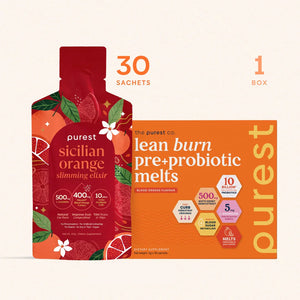
If starchy meals are your weak spot, our Lean Burn Pre+Probiotic Melts have 500 mg of white kidney bean extract with probiotics, a lower amount than the 3,000 mg a day most trials used.
Shop Night Burn Saffron Elixir
90-day money-back guarantee
Related reading: Stress, cortisol and belly fat: is there really a connection? · How to sleep better naturally on hot Philippine nights · Always exhausted? Iron deficiency is the cause women miss most
Frequently asked questions
Why do I crave sweets at night?
Night cravings often follow a low-protein breakfast, a stressful day or too little sleep. In one trial, a high-protein breakfast reduced evening snacking on high-fat foods compared with skipping breakfast. A planned, filling dinner and an earlier bedtime are good first steps.
Is there a natural alternative to weight-loss injections?
No. No supplement or habit works like prescription weight-loss medicines. Good habits help appetite and a few ingredients have small trials, but the effects are much smaller. Talk to your doctor if you're considering medical treatment.
Does saffron reduce cravings?
One 8-week trial in 60 mildly overweight women found that 176.5 mg a day of a saffron extract reduced how often they snacked compared with placebo. It's promising, but it's a single small trial of one extract, so the evidence isn't strong yet.
How long does it take for cravings to ease?
It varies from person to person, and studies don't give a single timeline. In the sleep study, hunger rose after just two short nights, which suggests sleep and meal changes can affect appetite fairly quickly. Give new habits a few weeks and be consistent.
Key takeaways
- Cravings are mostly driven by blood sugar dips, short sleep, stress and cues, not weak willpower.
- A protein-rich breakfast, about 25 to 30 g of protein per meal, fiber, water and screen-free eating all have studies behind them.
- Saffron extract and white kidney bean extract have small or industry-linked trials, at doses that may differ from what products contain.
- See a doctor if cravings come with strong thirst, weight loss, non-food cravings or feeling out of control around food.
References
[1] Wyatt P, Berry SE, Finlayson G, et al. Postprandial glycaemic dips predict appetite and energy intake in healthy individuals. Nat Metab. 2021.
[2] Spiegel K, Tasali E, Penev P, Van Cauter E. Brief communication: Sleep curtailment in healthy young men is associated with decreased leptin levels, elevated ghrelin levels, and increased hunger and appetite. Ann Intern Med. 2004.
[3] Epel E, Lapidus R, McEwen B, Brownell K. Stress may add bite to appetite in women: a laboratory study of stress-induced cortisol and eating behavior. Psychoneuroendocrinology. 2001.
[4] Leidy HJ, Ortinau LC, Douglas SM, Hoertel HA. Beneficial effects of a higher-protein breakfast on the appetitive, hormonal, and neural signals controlling energy intake regulation in overweight/obese, "breakfast-skipping," late-adolescent girls. Am J Clin Nutr. 2013.
[5] Leidy HJ, Clifton PM, Astrup A, et al. The role of protein in weight loss and maintenance. Am J Clin Nutr. 2015.
[6] Clark MJ, Slavin JL. The effect of fiber on satiety and food intake: a systematic review. J Am Coll Nutr. 2013.
[7] Davy BM, Dennis EA, Dengo AL, Wilson KL, Davy KP. Water consumption reduces energy intake at a breakfast meal in obese older adults. J Am Diet Assoc. 2008.
[8] Robinson E, Aveyard P, Daley A, et al. Eating attentively: a systematic review and meta-analysis of the effect of food intake memory and awareness on eating. Am J Clin Nutr. 2013.
[9] Udani J, Tan O, Molina J. Systematic Review and Meta-Analysis of a Proprietary Alpha-Amylase Inhibitor from White Bean (Phaseolus vulgaris L.) on Weight and Fat Loss in Humans. Foods. 2018.
[10] Gout B, Bourges C, Paineau-Dubreuil S. Satiereal, a Crocus sativus L extract, reduces snacking and increases satiety in a randomized placebo-controlled study of mildly overweight, healthy women. Nutr Res. 2010.
These statements have not been evaluated by any regulatory authority. This product is not intended to diagnose, treat, cure, or prevent any disease. Individual results may vary. Consult a healthcare provider before use if you are pregnant, breastfeeding, or on prescribed medication.


