




















Short answer: period bloating is mostly driven by the rise and fall of progesterone and oestrogen, which cause water retention and slow your gut. It usually peaks just before your period and eases within a few days. Hydration, fibre, gentle movement and gut support all help.
Why your cycle changes your digestion
In the days before your period, progesterone rises and relaxes smooth muscle — including in your digestive tract — which slows things down and can cause constipation and trapped gas. Hormonal shifts also make your body hold onto more water and salt, giving that puffy, heavy feeling. As your period starts, prostaglandins can speed the gut up again. It's a normal, predictable pattern.
What actually helps
Drink more water (counterintuitively, it reduces water retention), ease off very salty food in your premenstrual week, and keep moving — a walk genuinely helps gas move through. Soluble fibre and a consistent gut routine support more regular digestion across the whole month, so bloating has less of a backlog to build on.
Supporting your gut across the cycle
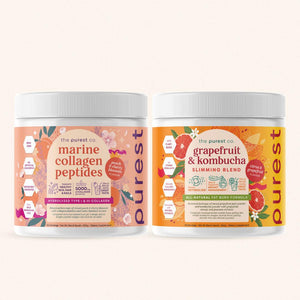
A steady gut is more resilient to the hormonal swings that drive bloating. A daily pre- and probiotic like our Daily Pre+Probiotic Melts supports regularity month-round, while our Grapefruit & Kombucha Slimming Blend pairs gut-friendly fibre with a metabolism-supporting routine. These support digestion generally — they aren't a treatment for menstrual symptoms.
FAQ
How long does period bloating last? It usually peaks in the days before your period and settles within 2–4 days of it starting.
When should I see a doctor? If bloating is severe, constant, or comes with significant pain, see a doctor to rule out conditions like endometriosis or IBS.
Does drinking water reduce bloating? Yes — staying hydrated helps your body release retained water rather than hold onto it.
General education only, not medical advice. Persistent or severe bloating should be assessed by a healthcare professional.