















Is PCOS linked to gut health?
Several studies have found that women with PCOS tend to have a less diverse mix of gut bacteria, and the differences track with higher androgen levels. That's an association, not proof that the gut causes PCOS. The best-supported steps are still a doctor's diagnosis plus everyday habits: activity, good-quality food and sleep.
This article is for you if: you have PCOS or think you might, and want to know what the research says about the gut, probiotics and inositol.
PCOS (polycystic ovary syndrome) is common, frustrating and still poorly understood, and the gut microbiome is now part of the conversation. Here's an honest look at what microbiome studies found, which habits the international PCOS guideline backs, and what probiotic and inositol trials really showed.
In this article
What is PCOS, and where does insulin fit in?
PCOS is a hormonal condition that affects an estimated 10% to 13% of women of reproductive age, and may be even more common in Southeast Asia.[1]
Only a doctor can diagnose PCOS. In adults, the guideline uses criteria built on the 2003 Rotterdam criteria, which need two of these three, after other causes are ruled out:[1]
- Irregular or absent ovulation, which often shows up as irregular periods.
- Signs of higher androgens (male-type hormones), such as excess facial or body hair or acne, or high levels on a blood test.
- Polycystic ovaries on ultrasound, or, in adults, a high AMH blood test instead.
Teens need both of the first two, because ultrasound and AMH aren't reliable at that age.[1]
Insulin resistance, where your cells respond poorly to insulin so the body makes more of it, is recognized as a key feature of PCOS.[1] The metabolic side of PCOS raises the risk of type 2 diabetes.[2] The guideline doesn't recommend routine insulin blood tests, though, because the ones available in clinics aren't accurate enough. Your doctor decides what to check.
What do gut microbiome studies show?
A handful of studies have compared gut bacteria in women with and without PCOS:
- Lower diversity. In a Polish study, women with PCOS had less diverse gut bacteria than healthy women. Women with polycystic-looking ovaries but no other PCOS features fell in between. Higher testosterone and more excess hair went with lower diversity.[2]
- Hormones and weight both play a part. A Spanish study of 15 women with PCOS, 16 women without it and 15 men found that sex, sex hormones and obesity together shaped the gut microbiome. Across everyone, more androgen went with differences in diversity and in several bacterial groups.[3]
A review concluded that androgens may help shape the gut microbiome in women, but that studies are still needed to show how.[4]
The honest limits: these studies are small snapshots. They can't tell us whether gut changes help cause PCOS, result from higher androgens, or both, and there's no "PCOS gut test". If gut symptoms like bloating bother you around your cycle, our guide to why period bloating happens and what eases it covers practical fixes.
Which lifestyle steps have the strongest evidence?
The 2023 guideline calls a healthy lifestyle a core part of PCOS care, and it's clear that the benefits come even without weight loss.[1] It also asks doctors to be aware of weight stigma, which many women with PCOS face.
| Habit | What the 2023 guideline says | An everyday Filipino version |
|---|---|---|
| Movement | Aim for 150 to 300 minutes of moderate activity or 75 to 150 minutes of vigorous activity a week, plus muscle strengthening on 2 non-consecutive days. No single type of exercise has proven better. | Brisk mall walks, Zumba, swimming, or bodyweight exercises at home twice a week. |
| Diet quality | No one diet has proven better for PCOS. Any healthy, not overly restrictive pattern that suits you helps. | Half a plate of gulay like kangkong or malunggay, plus fish, eggs or tokwa, with sensible rice portions. |
| Sleep | Women with PCOS have a higher rate of obstructive sleep apnea, whatever their weight. Snoring with unrefreshing sleep or daytime sleepiness should be checked. | Tell your doctor if you snore and wake up tired. Keep a regular bedtime. |
| Support and well-being | Behavioral support like goal setting and self-monitoring can help. Depression and anxiety are common with PCOS, and doctors should screen for both. | Set one small goal a week, and speak up if your mood is low. |
Sources: Teede et al., 2023 International Evidence-based PCOS Guideline.[1]
Two practical wins: swap one daily sugary milk tea for unsweetened tea or water, and protect your sleep, since poor sleep tends to make cravings worse. Stress matters too. Our article on stress, cortisol and belly fat explains what the research does and doesn't show.
Do probiotics help with PCOS?
Possibly, but the evidence is early. A 2020 meta-analysis pooled 9 randomized trials with 587 women with PCOS who took probiotics or synbiotics (probiotics plus prebiotic fiber) for at least 8 weeks.[5] Compared with controls, fasting blood sugar, fasting insulin, insulin resistance (HOMA-IR) and BMI improved, and testosterone, excess hair scores, triglycerides and inflammation markers changed.
Before you read too much into that:
- The trials were small and used different strains and doses, so there's no proven "PCOS probiotic".
- They measured lab markers, not everyday changes like more regular periods.
- The authors' own conclusion was cautious. They wrote that probiotics and synbiotics "seem to" influence these markers.
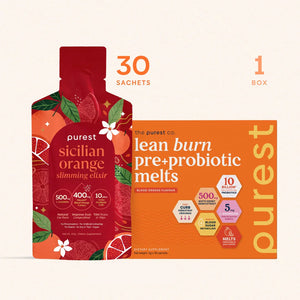
For general gut health, our Daily Pre+Probiotic Melts give 15 billion CFU from 7 strains, though they weren't the products tested in these trials. Our guide on how to choose a probiotic in the Philippines explains what to look for on a label.
What do inositol studies show?
Inositol is a sugar-like compound your body makes and also gets from food. Two forms, myo-inositol and D-chiro-inositol, have been studied in women with PCOS because of their role in insulin signaling. The results depend a lot on who did the analysis.
| Review | Trials and women | What it found | Worth knowing |
|---|---|---|---|
| Unfer et al., 2017 | 9 trials, 496 women | Lower fasting insulin and insulin resistance with myo-inositol. Testosterone dropped slightly, but not significantly. | Two authors were employees of, and one a paid consultant to, an inositol supplement maker. |
| Greff et al., 2023 | 26 trials, 1,691 women | Inositol users 1.79 times as likely as placebo users to have regular cycles, with small drops in BMI, testosterone and blood sugar. | Independent university team. Concluded inositol was effective and safe. |
| Fitz et al., 2024 | 30 trials, 2,230 women | Some benefit for metabolic measures, possibly no effect on other outcomes. Fewer stomach side effects than metformin. | Done for the 2023 guideline. Called the evidence "limited and inconclusive". |
Sources: the meta-analyses listed in the References.[6] [7] [8]
Based on that last review, the 2023 guideline says inositol "could be considered", noting limited harm and possible metabolic benefits, but limited benefits for ovulation, excess hair or weight.[1] It doesn't recommend any specific type, dose or combination, and it treats inositol as experimental for fertility. Metformin is preferred for excess hair and central weight.
How do the doses compare? In the guideline's review, most myo-inositol trials gave 1 to 4 g a day. Trials of the 40:1 myo- to D-chiro-inositol ratio used 550 mg myo-inositol plus 13.8 mg D-chiro-inositol twice a day.[8]
Where does Hormone Harmony fit?
Hormone Harmony gives you 2,000 mg of myo-inositol and 50 mg of D-chiro-inositol per scoop, in the same 40:1 ratio. That puts the myo-inositol inside the 1 to 4 g daily range used in trials, at about half the 4 g a day some trials used. The D-chiro-inositol is a little higher than the 27.6 mg a day in the 40:1 trials, and far below the 600 to 1,200 mg a day used in trials of D-chiro-inositol alone.[8] It also contains a 257 mg herbal blend (Cynanchum wilfordii, Phlomis umbrosa and Angelica gigas) and black pepper extract. The trials above tested inositol on its own, not our full formula. It's a pink guava drink powder, ₱2,200 for 30 scoops.
It's designed to sit alongside medical care, not replace it. Inositol has been studied in women with PCOS with mixed results, so talk to your doctor or OB-GYN first, especially if you take metformin, the pill or fertility medicine, or you're trying to get pregnant.
90-day money-back guarantee
Related reading: Why adult acne loves your jawline · How much protein do women actually need? · The beginner's guide to prebiotics and probiotics
Frequently asked questions
Can fixing my gut cure PCOS?
No. PCOS has no cure, and gut differences in PCOS are an association, not a proven cause. A healthy lifestyle and medical care from your doctor are the foundation. Gut-friendly habits can be part of that, not a replacement for it.
Who should I see if I think I have PCOS?
Start with an OB-GYN, or an endocrinologist if you're referred. Go if your periods are irregular or missing, or you notice new excess hair, persistent acne or hair thinning, since other causes need ruling out.
Do I need to lose weight to manage PCOS?
Not necessarily. The 2023 international guideline says a healthy lifestyle has benefits even without weight loss. For women with a higher weight, modest weight loss can help, but goals should be set with your doctor and suit you.
Can I take inositol with metformin or the pill?
Ask your doctor first. The guideline encourages women taking inositol or other supplements to tell their healthcare professional, and it hasn't set a recommended dose or combination. If you're pregnant, trying to conceive or on fertility treatment, check before starting any supplement.
Key takeaways
- PCOS affects an estimated 10% to 13% of women and needs a doctor's diagnosis.
- Small studies link PCOS to a less diverse gut microbiome, tied to higher androgens, but they can't show cause and effect.
- The best-supported steps are regular activity, healthy eating you can stick with, good sleep and support, with benefits even without weight loss.
- Probiotic and inositol trials improved some blood markers, but the evidence is limited and no specific dose is recommended.
- Check with your doctor or OB-GYN before adding supplements, especially if you're on medication or trying to conceive.
References
[1] Teede HJ, Tay CT, Laven JJE, et al. Recommendations From the 2023 International Evidence-based Guideline for the Assessment and Management of Polycystic Ovary Syndrome. J Clin Endocrinol Metab. 2023.
[2] Torres PJ, Siakowska M, Banaszewska B, et al. Gut Microbial Diversity in Women With Polycystic Ovary Syndrome Correlates With Hyperandrogenism. J Clin Endocrinol Metab. 2018.
[3] Insenser M, Murri M, Del Campo R, et al. Gut Microbiota and the Polycystic Ovary Syndrome: Influence of Sex, Sex Hormones, and Obesity. J Clin Endocrinol Metab. 2018.
[4] Thackray VG. Sex, Microbes, and Polycystic Ovary Syndrome. Trends Endocrinol Metab. 2019.
[5] Cozzolino M, Vitagliano A, Pellegrini L, et al. Therapy with probiotics and synbiotics for polycystic ovarian syndrome: a systematic review and meta-analysis. Eur J Nutr. 2020.
[6] Unfer V, Facchinetti F, Orrù B, Giordani B, Nestler J. Myo-inositol effects in women with PCOS: a meta-analysis of randomized controlled trials. Endocr Connect. 2017.
[7] Greff D, Juhász AE, Váncsa S, et al. Inositol is an effective and safe treatment in polycystic ovary syndrome: a systematic review and meta-analysis of randomized controlled trials. Reprod Biol Endocrinol. 2023.
[8] Fitz V, Graca S, Mahalingaiah S, et al. Inositol for Polycystic Ovary Syndrome: A Systematic Review and Meta-analysis to Inform the 2023 Update of the International Evidence-based PCOS Guidelines. J Clin Endocrinol Metab. 2024.
These statements have not been evaluated by any regulatory authority. This product is not intended to diagnose, treat, cure, or prevent any disease. Individual results may vary. Consult a healthcare provider before use if you are pregnant, breastfeeding, or on prescribed medication.


